


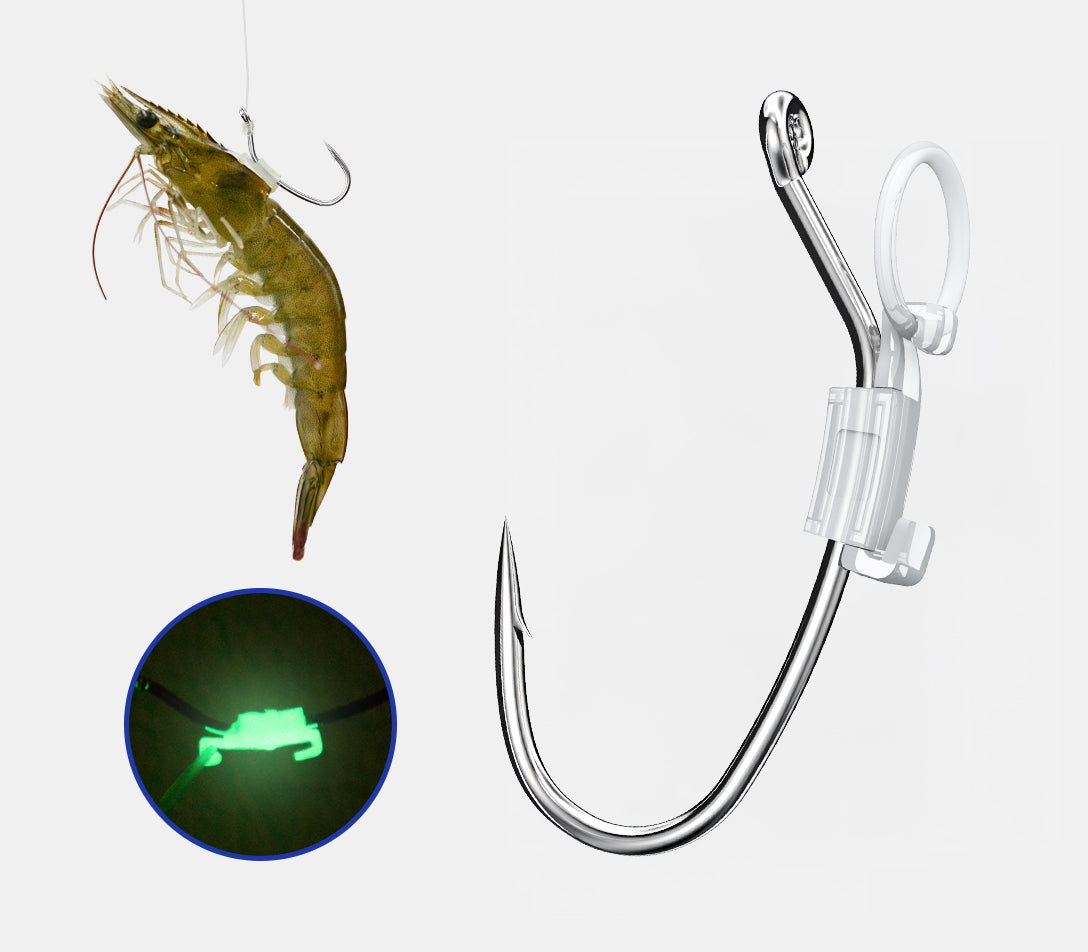

Current changes everything. What works in a quiet lake often fails in a fast river — and vice versa. This guide shows how to rig, place, and retrieve Smart Bait for moving water and still water, so you can switch spots without guessing.
🏞️ Rivers & Streams — Read the Current, Control the Angle
In moving water, fish hold behind structure to conserve energy: boulders, bridge pilings, eddies, seam lines. Your presentation must work with the current, not fight it.
Rigging
- Leader: 8–12 lb fluoro, 18–24 in
- Weighting: Add a small split shot 8–10 in above bait for control
- Knot: Palomar for strength in shock loads
Placement
- Cast upstream and let bait drift naturally
- Target current seams, tail-outs, and eddy lines
- Keep slight line tension to feel strikes
Smart Bait Settings
- Mode: Soft pulses; low vibration
- Retrieve: Lift-drop to “hop” across bottom contours
- Tip: Short pauses behind rocks to trigger ambush bites
Flow speed dictates action: the faster the current, the less motion you need to add. Let the river move the bait — you only steer.
🌅 Lakes & Ponds — Find Structure, Work the Water Column
Still water demands location and cadence. Fish track edges: weedlines, points, docks, creek channels, and drop-offs. You create the movement — and Smart Bait amplifies it.
Rigging
- Leader: 6–10 lb fluoro, 12–18 in
- Weighting: Unweighted or light pinch weight for slow fall
- Knot: Improved clinch or loop knot for freer action
Placement
- Work edges first: shade lines, docks, grass walls
- Count down to specific depth; note time-to-depth for consistency
- Fan-cast to cover water quickly, then slow down on contacts
Smart Bait Settings
- Mode: Moderate vibration; occasional flash
- Retrieve: Slow roll with 2–3 s stops to suspend
- Tip: Speed up over grass tops; pause at drop-offs
In clear lakes, sight trumps noise — keep vibration subtle and rely on natural swimming motion with strategic pauses.
⚖️ Quick Matrix — Match Setup to Water Type
| Factor | River / Stream | Lake / Pond |
|---|---|---|
| Primary Target Zones | Eddies, seams, behind boulders, tail-outs | Weedlines, docks, points, channel edges |
| Casting Angle | Upstream 20–45°; drift past the spot | Fan-cast; grid by depth bands |
| Leader & Weight | Longer leader; small split shot for control | Shorter leader; minimal weight for slow fall |
| Smart Bait Profile | Low vibration, current-driven action | Moderate vibration, cadence-driven action |
| Retrieve | Lift–drop; hold in breaks, then slide | Slow roll; stop–go; hover on breaks |
🧰 Common Mistakes & Fast Fixes
Overpowering the River
Too much retrieve speed in current looks unnatural. Reduce input; let flow animate the bait.
Ignoring Depth in Lakes
Fish suspend. Count your sink rate and repeat the depth that gets bites.
No Pause on Structure
Strikes often happen on the pause at breaks, grass edges, and shade transitions.
🎣 Pro Tip — Two Rods, Two Profiles
Keep one rod rigged for current (split shot + soft pulses) and one for still water (light leader + slow roll). Swap locations without re-tying — and log which cadence produced so you can duplicate it fast.
Ready to fish anywhere?
Pair Kanama Smart Bait with a simple two-rig system and cover rivers, streams, lakes, and ponds in one outing. Less re-rigging. More catching.


